
Denver’s climate isn’t ideal for every plant. With the high altitude, dry summers, cold winters, and intense UV exposure, many species that thrive in other areas will struggle here.
Getting your tree selection right the first time around saves you money, cuts down on maintenance, and saves you the frustration of failed planting.
What to Consider Before Choosing a Tree in Denver
Denver’s Climate and Altitude—What It Means for Tree Selection
At 5,280 feet, Denver’s climate plays by its own rules. The sun is harsher, temperature swings are wild, and a late-season freeze can catch you off guard well into May. Trees that thrive in Kansas City or Phoenix just aren’t built for a Colorado winter or a sudden spring frost.
For the best chance of success in the metro area, stick to native or regionally adapted species rated for USDA hardiness zones 5b or 6a.
Proximity to the House: Roots, Shade, and Clearance
Where you plant matters as much as what you plant. Large-canopy trees need enough setback from your foundation, driveway, and utility lines to accommodate mature root spread—at least 20 feet from the foundation is a reasonable starting point for larger species.
Smaller ornamentals can handle being closer—about 8 to 10 feet out—but double-check what’s above you before grabbing the shovel. It’s incredibly easy to overlook power lines. If a tree grows into a power line, you’ll need to constantly prune it or remove it altogether.
Water Requirements and Xeriscaping Considerations
Denver gets only about 14 inches of rain a year, so water is always top of mind. While drought-tolerant trees can eventually survive on natural rainfall alone, they need extra love for the first year or two. Soak the soil deeply early on to force the roots downward. This builds a deep, strong root system that makes the tree more resilient.
If you’re planning a broader landscaping project, trees that align with xeriscaping principles will reduce your water bill and fit within Denver’s outdoor water restrictions more easily.
Best Shade Trees for Denver Yards
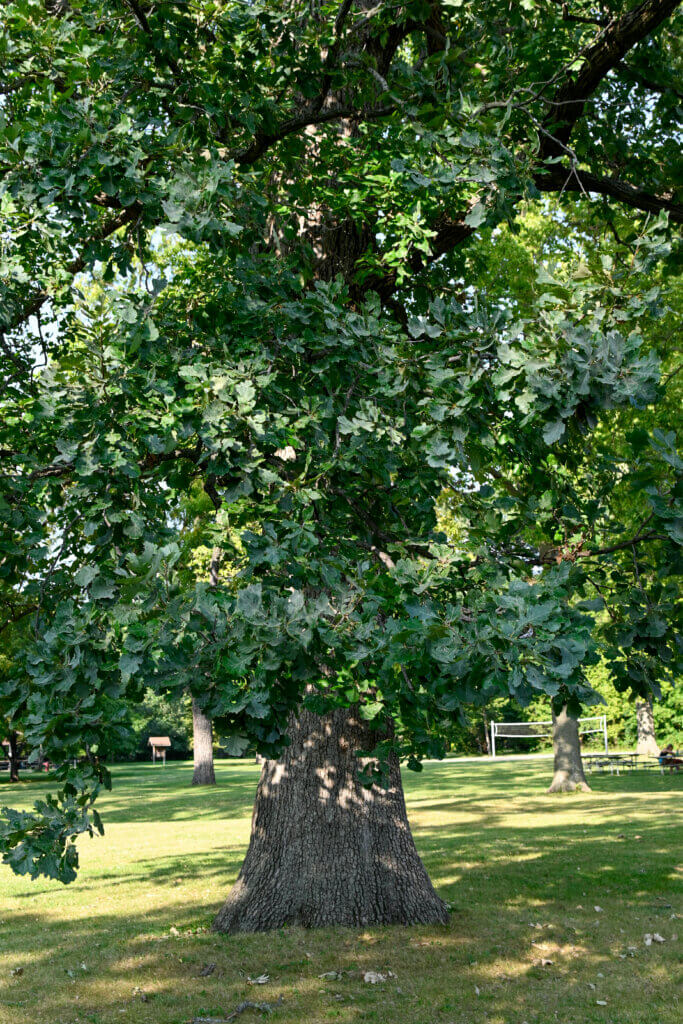
Bur Oak (Quercus macrocarpa)
One of the most durable trees for Colorado landscapes. Bur oaks are slow-growing but long-lived, extremely drought-tolerant once established, and resistant to late spring frosts. They develop a wide canopy over time, making them a strong choice for front yards with room to spread. Expect 40 to 60 feet at maturity.
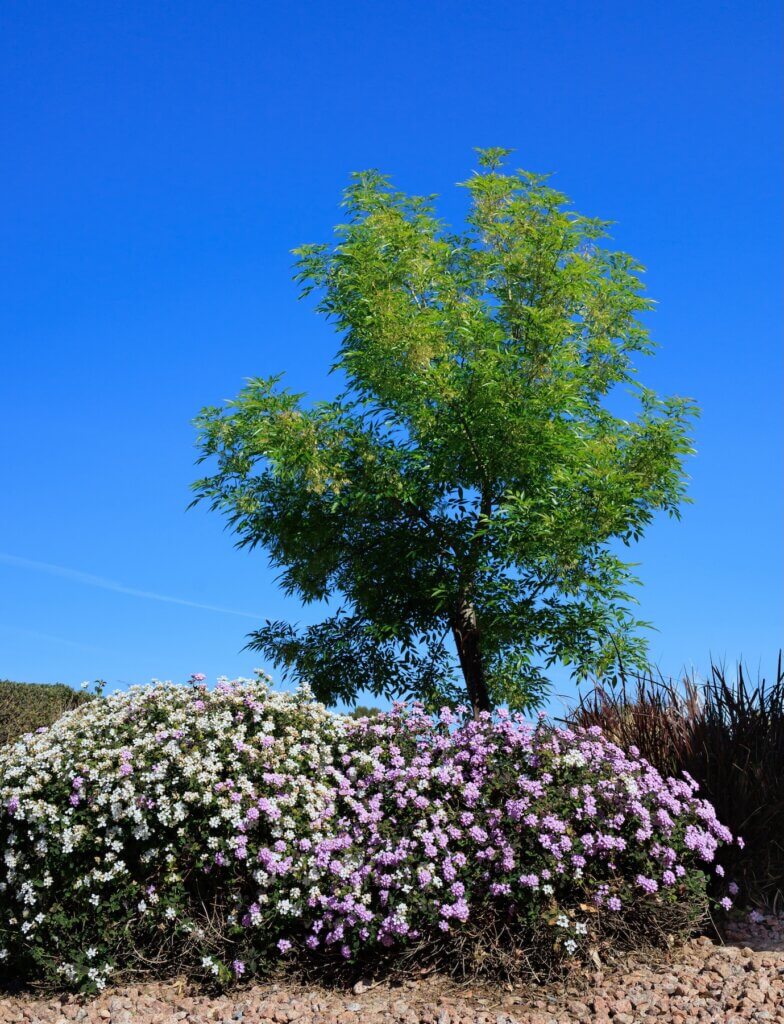
Honey Locust (Gleditsia triacanthos var. inermis)
The thornless honey locust handles heat, drought, and alkaline soils. Its fine leaves cast dappled shade that allows grass to grow underneath, which is a practical advantage in partially shaded areas. It also leafs out late in spring, preventing early-season freeze damage. Honey locusts grow 30 to 50 feet tall.
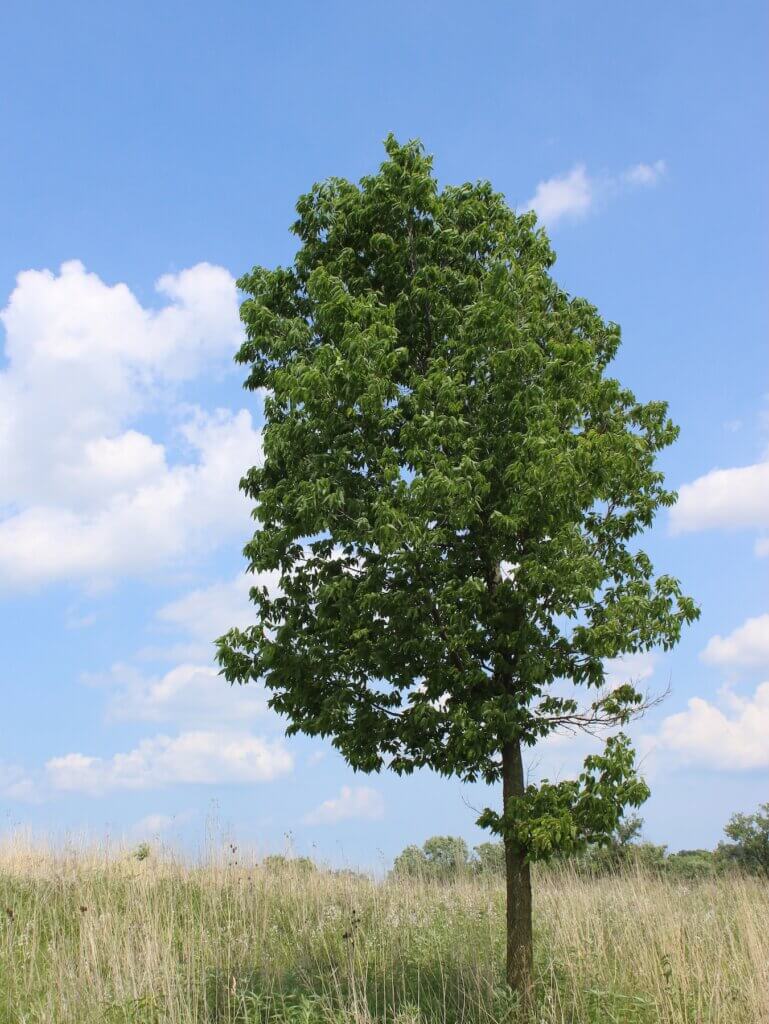
Hackberry (Celtis occidentalis)
Hackberry is a native plains species built for Colorado’s toughest conditions: compacted urban soils, drought, wind, and temperature extremes. It doesn’t get as much attention as flashier species, but it’s reliable and underused in Denver landscapes, offering good value to wildlife. Mature height ranges from 40 to 60 feet.
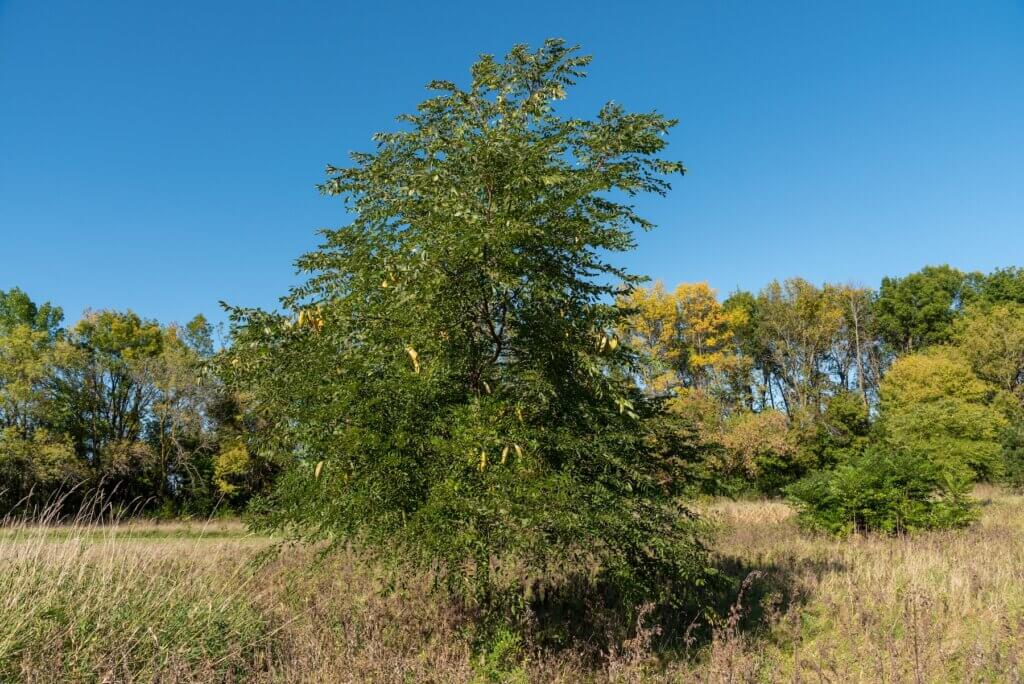
Kentucky Coffeetree (Gymnocladus dioicus)
An underappreciated option, Kentucky coffeetrees handle drought and alkaline soils, have a striking winter silhouette, and are largely pest- and disease-free. They grow 60 to 75 feet at maturity, so give them space.
Best Ornamental Trees for Curb Appeal
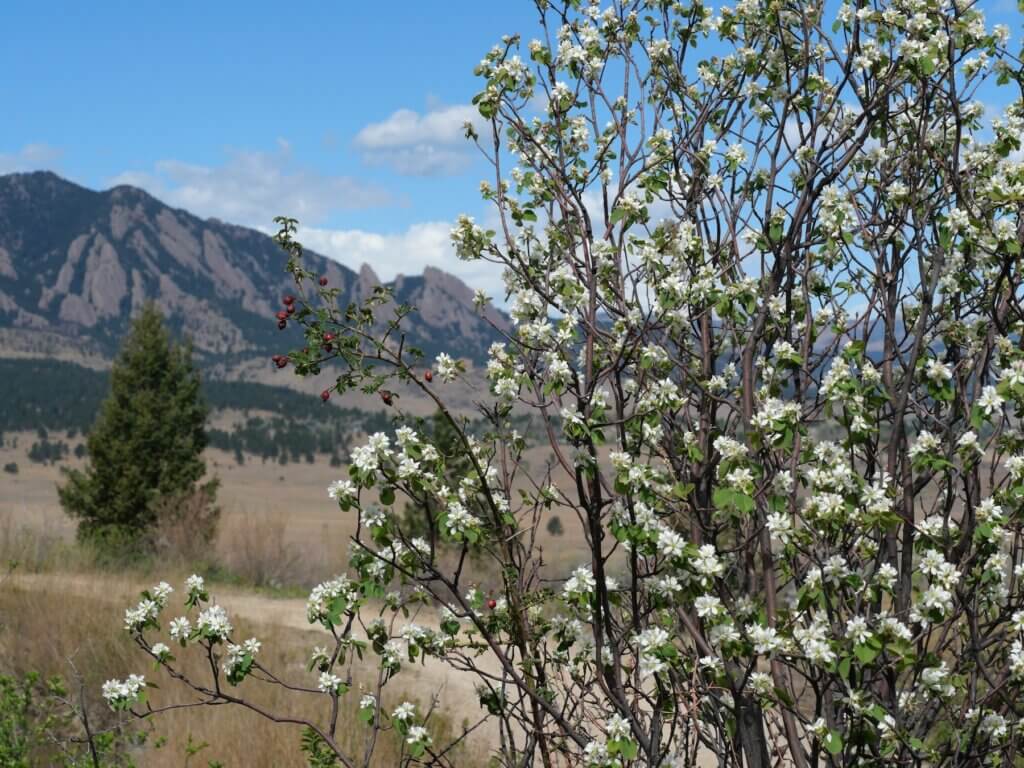
Serviceberry (Amelanchier spp.)
Serviceberry is one of the best small trees for Colorado landscapes. It offers four-season interest—white flowers in early spring, edible berries in summer, and orange-red fall color. It’s native to the region, drought-tolerant, and tops out around 15 to 25 feet, making it well-suited for smaller yards or spots closer to the house.
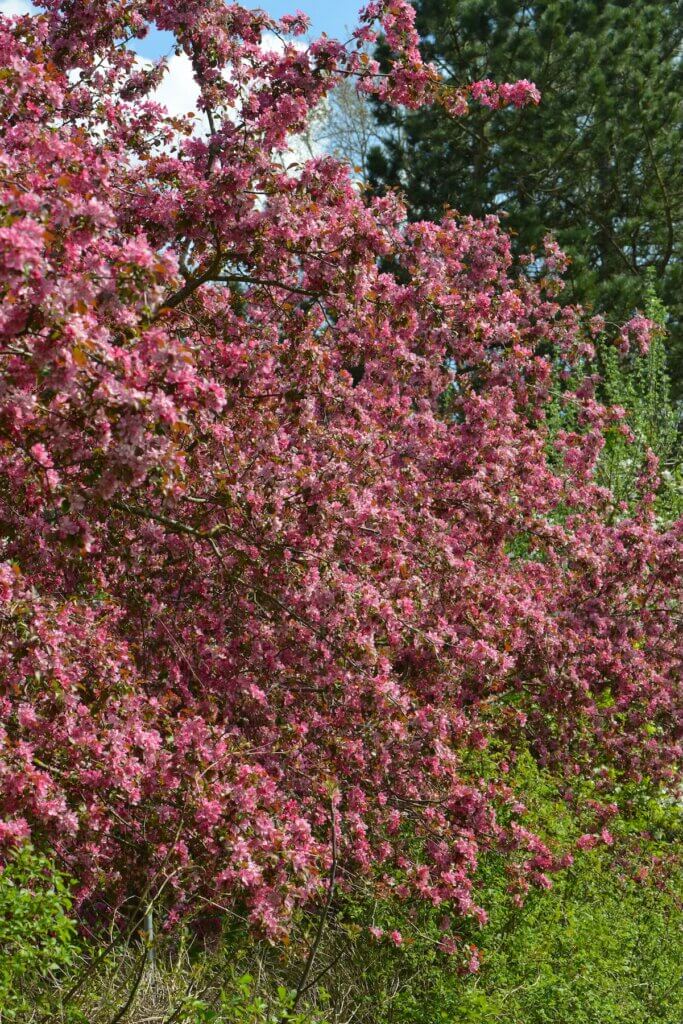
Flowering Crabapple (Malus spp.)
A reliable choice for front yard curb appeal. Flowering crabapples bloom heavily in spring and produce persistent fruit that carries color into winter. Stick with disease-resistant varieties. Scab and fire blight are common issues with older cultivars. Most mature between 15 and 25 feet.
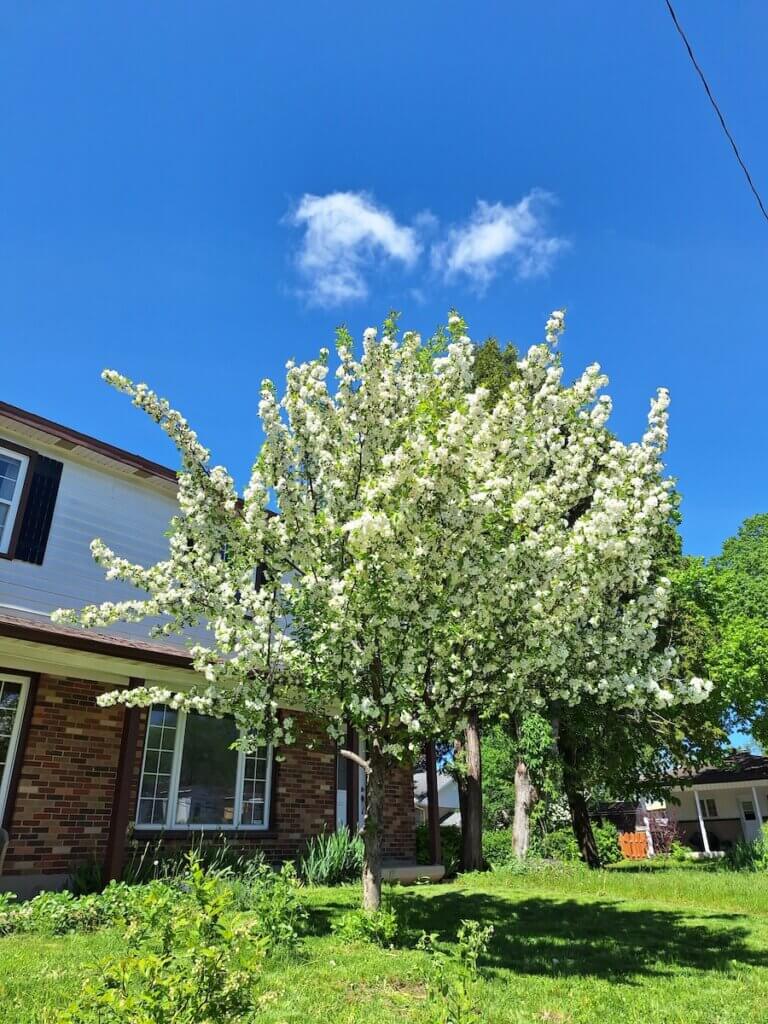
Japanese Tree Lilac (Syringa reticulata)
Most flowering trees in Denver put on their show in April and May, right when a late freeze can cut them short. The Japanese tree lilac blooms in late June. Its flowers are large, creamy white, and eye-catching, and the tree itself isn’t fussy. It handles urban soils and alkaline conditions without much intervention, growing 20 to 30 feet tall.
Trees to Avoid Planting Near Your Home
Cottonwood and Silver Maple are both common in Denver neighborhoods, and both cause recurring problems for homeowners. Their root systems are aggressive and shallow. Over time, they work their way into sewer lines, lift driveways, and put pressure on foundations. If either species is already on your property, keep new plantings well away from the house; if you’re starting fresh, choose a less invasive tree.
Siberian Elm spreads fast, which makes it an appealing choice, but the tradeoff is structural weakness. Branches break regularly under Colorado’s heavy, wet spring snowstorms, and you’ll quickly tire of cleanup. It also reseeds aggressively and has a way of turning up where you didn’t plant it.
Lombardy Poplar rarely makes sense as a long-term residential tree. It’s short-lived—often less than 15 years—prone to disease, and has invasive roots. Homeowners plant Lombardy Poplars as a quick windbreak, but they often end up removing them sooner than expected.
How Landscaping Fits into a Home Renovation Plan
You might want to push tree planting to the bottom of your list during a renovation, but timing it alongside a larger project is beneficial. Trees planted early have time to establish while construction wraps up. Plus, thoughtful placement—particularly on south- and west-facing sides of the house—can reduce cooling loads over time.
Though you can’t replicate mature trees quickly, they do contribute to your home’s resale value. Early planting gives them time to mature and add beauty and character to your home.
If you’re thinking through the full scope of a home improvement project, including landscaping, our Denver home renovation cost breakdown is a good place to start.
Tackling a broader home improvement project?
Get in touch with the Denver Design Build team.